

Imagine where a factory worker doesn’t have to ignore chest pains because visiting a doctor means choosing between healthcare and next month’s rent. Imagine a society where a cancer diagnosis doesn’t mean selling your family home, where diabetes management doesn’t require choosing between insulin and groceries, and where seeking mental health support doesn’t lead to bankruptcy.
This isn’t a utopian fantasy; it’s the promise of WHO Universal Health Coverage, and it’s achievable. Right now, across the globe, millions face impossible choices daily: healthcare or food, treatment or rent, life or financial ruin. The statistics are staggering: 4.6 billion people lack essential health coverage, and 2.1 billion face financial catastrophe from medical costs. But here’s the powerful truth: we know how to fix this. UHC provides the roadmap, the evidence, and the solutions. The crucial question isn’t whether WHO Universal Health Coverage is possible; it’s how quickly we can make it a reality.
This is Part 3 of our Universal Health Coverage series. If you’re looking for foundational context, we encourage you to explore Part 1, where we explain what WHO Universal Health Coverage truly means and why it matters, and Part 2, which reveals the devastating human cost through real stories and statistics.
This blog focuses on solutions, practical, proven approaches that can make WHO Universal Health Coverage a reality. How can governments, health systems, and citizens work together to ensure that no one ever again must choose between healthcare and survival? Let’s explore the roadmap forward and the call to action for everyone who believes health is a human right.
What WHO Universal Health Coverage Can Fix and How
Universal Health Coverage isn’t merely an ideal; it’s a practical framework with proven capacity to transform health systems and societies. Here’s what comprehensive UHC achieves:
• Eliminates financial hardship from healthcare costs.
The primary goal of the WHO Universal Health Coverage is to ensure that healthcare doesn’t push people into poverty. Through prepayment mechanisms like taxation, social health insurance, or pooled funding, the WHO Universal Health Coverage spreads financial risk across entire populations. Instead of individuals bearing catastrophic costs when they fall ill, societies collectively shoulder the burden. Countries that have successfully implemented UHC have virtually eliminated medical bankruptcy.
• Provides accessible care for all.
Universal Health Coverage means removing barriers, not just financial ones, but also geographical, cultural, and systemic obstacles. It ensures health facilities exist within reasonable reach, that services are culturally appropriate, and that everyone receives care regardless of their ability to pay, where they live, or their social status.WHO Universal Health Coverage transforms healthcare from something you must earn into something you inherently deserve.
• Reduces inequalities systematically.
By design, WHO Universal Health Coverage prioritises the most vulnerable, the poor, rural populations, women, children, the elderly, and people with disabilities. It recognises that without intentional focus on equity, health systems naturally serve the wealthy and urban populations better. UHC policies deliberately allocate resources to close these gaps, measuring success not by averages but by how well the most disadvantaged are served.
• Strengthens primary healthcare as the foundation.
UHC emphasises primary care, the first point of contact for most health needs. Strong primary care prevents problems from becoming crises, manages chronic conditions effectively, and keeps expensive hospital care for when it’s truly needed. This approach is both more effective and more efficient than systems focused primarily on hospital-based acute care.
• Improves national productivity and well-being.
Healthy populations work more productively, children attend school regularly, and families can invest in their futures rather than depleting savings on medical emergencies. UHC creates a positive cycle: better health enables economic participation, which generates resources that can be reinvested in health systems, further improving population health.
The Role of Primary Health Care in WHO Universal Health Coverage
Primary Health Care (PHC) serves as the cornerstone of any successful UHC system, yet it’s often misunderstood or undervalued.
Primary Health Care is your local GP surgery, community health centre, or village health worker, the accessible, first-line health services that address most health needs throughout life. Rather than focusing solely on treating diseases, PHC emphasises prevention, early detection, and ongoing management of health conditions within communities. It’s where relationships between healthcare providers and patients develop over time, enabling personalised, holistic care.
• Preventive care through PHC saves lives and money.
Vaccinations prevent diseases that would otherwise sicken or kill millions, particularly children. Health education helps people make choices that keep them healthy. Screening programmes catch cancers, diabetes, and other conditions early when treatment is simpler and more effective. These preventive services, central to WHO UHC , cost relatively little but deliver enormous benefits.
• Early diagnosis changes outcomes.
When people can easily access primary care without financial barriers, they seek help earlier. That persistent cough gets checked before it becomes pneumonia. Blood pressure gets monitored before it causes a stroke. Mental health concerns are addressed before a crisis. Early diagnosis through accessible primary care is a fundamental feature of UHC .
• Community-based support manages chronic conditions.
Diabetes, hypertension, asthma, and mental health conditions require ongoing care and support. Primary Health Care embedded in communities, backed by UHC, provides this continuity. Regular check-ups, medication management, lifestyle support, and monitoring prevent complications that would otherwise require hospitalisation.
• Examples of PHC in action:
A mother brings her baby for scheduled vaccinations, protected from preventable diseases. A pregnant woman receives antenatal care, dramatically reducing risks to herself and her baby. A person with diabetes gets regular monitoring and support, preventing blindness, amputations, and kidney failure. An elderly person with multiple conditions has a single, trusted healthcare provider coordinating their care. These are the building blocks of UHC , delivered through strong Primary Health Care.
Investing in WHO Universal Health Coverage = Investing in National Development
The case for UHC extends far beyond healthcare; it’s fundamentally about national development and prosperity.
• Healthier populations create stronger workforces.
When workers aren’t battling illness or caring for sick family members, productivity soars. Businesses benefit from reduced absenteeism and presenteeism (being at work but unable to perform due to health issues). Innovation flourishes when talented people can contribute rather than being sidelined by treatable conditions. Nations that invest in WHO Universal Health Coverage see measurable returns in economic productivity.
• Better school attendance and educational outcomes.
Healthy children attend school regularly and learn more effectively. When families aren’t devastated by medical costs, children stay in school rather than dropping out to work. UHC thus supports educational achievement, which drives long-term prosperity and development.
• Lower poverty levels across generations.
By preventing families from falling into poverty due to health costs, UHC breaks cycles of generational disadvantage. Children whose families were protected by WHO Universal Health Coverage have better nutrition, education, and opportunities—changing their life trajectories and their children’s futures.
• Stronger, more resilient economies.
Countries with WHO Universal Health Coverage weathered the COVID-19 pandemic more effectively, both in health outcomes and economic resilience. Populations that trust they’ll receive care without financial ruin are more stable and cohesive. Investment in Universal Health Coverage yields returns that compound over decades.
• Improved social cohesion and stability.
When everyone has access to healthcare regardless of wealth, societies become more equitable and cohesive. Universal Health Coverage embodies the principle that we’re all in this together, that a child’s health matters whether they’re born to wealthy or poor parents. This solidarity strengthens the social fabric in measurable ways.
What Governments Must Do Now: A Call to Action for WHO Universal Health Coverage
Achieving UHC requires political will and concrete action. Here’s what governments must commit to now:
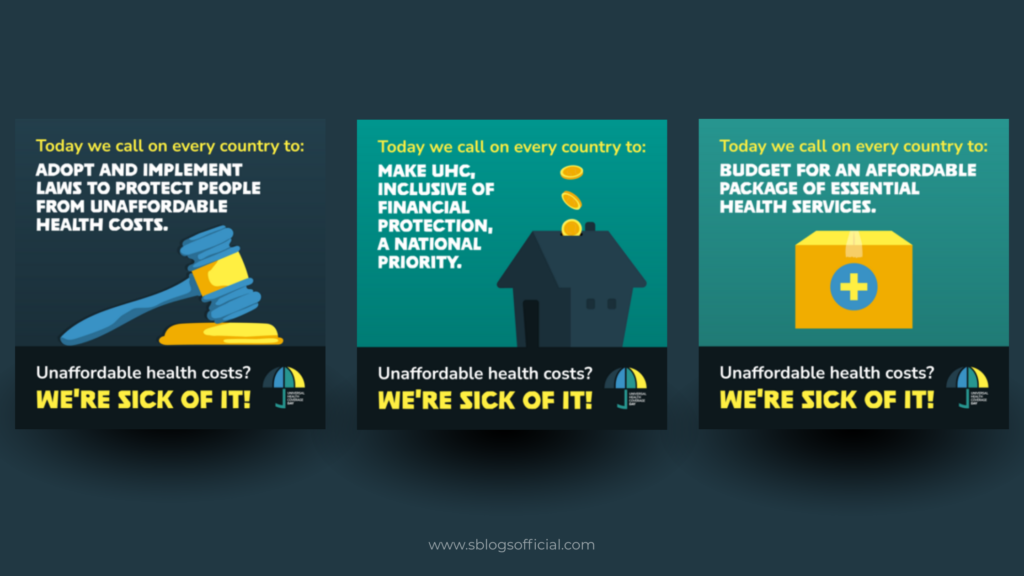
• Adopt laws guaranteeing the right to health.
Constitutional or legislative protection of health as a human right provides the foundation for the WHO UHC. Legal frameworks hold governments accountable and give citizens recourse when their health rights are violated.
• Increase public health budgets significantly.
Universal Health Coverage requires adequate funding. The WHO recommends countries spend at least 5% of GDP on health, with substantial portions allocated to primary care. Many countries fall far short, necessitating increased investment to achieve Universal Health Coverage benefits.
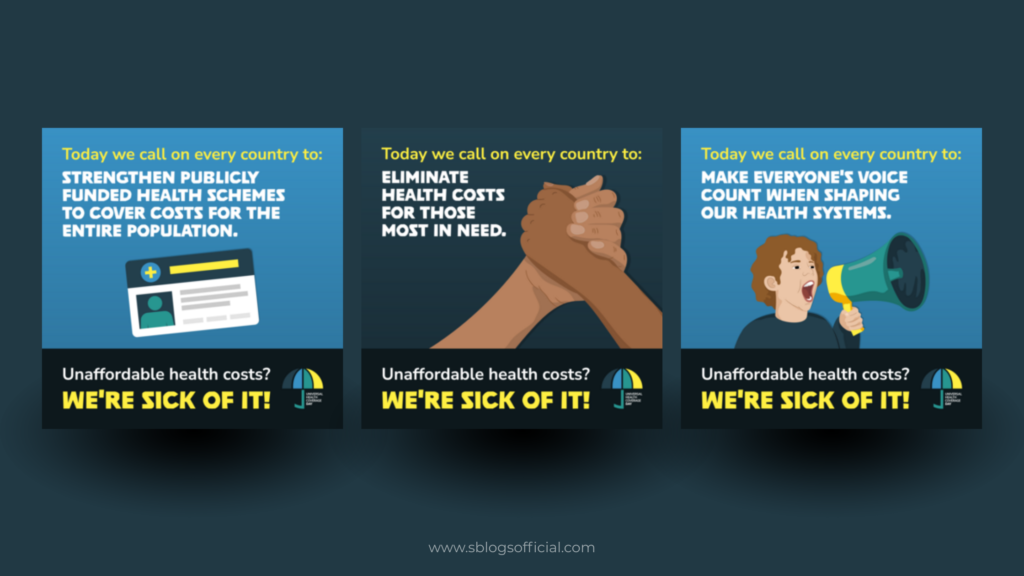
• Reduce out-of-pocket costs systematically.
Moving from systems where patients pay directly to prepayment mechanisms is central to Universal Health Coverage benefits. This requires developing or expanding health insurance systems, tax-funded services, or hybrid models appropriate to each country’s context.
• Strengthen Primary Health Care infrastructure.
Achieving UHC means building and staffing community health centres, training and deploying healthcare workers to underserved areas, and ensuring primary care facilities have the necessary equipment and medicines.
• Protect vulnerable populations intentionally.
UHC policies must explicitly address the needs of the poorest, rural populations, women, children, the elderly, people with disabilities, and other marginalised groups. Equity must be measured and prioritised.
• Ensure equity across all dimensions.
Universal Health Coverage means universal, not just urban residents or the employed, but everyone. Geographic equity, financial equity, and equity in quality of services must all be addressed systematically.
• Track progress transparently and be accountable.
Governments must establish metrics for WHO Universal Health Coverage, publish data regularly, and be held accountable by citizens. Transparency about progress toward UHC enables civic participation and pressure for continued advancement.
The Power of Citizens: Sharing Stories & Pushing for WHO Universal Health Coverage
Government action doesn’t happen in a vacuum; citizen voices create the political will necessary for Universal Health Coverage benefits.
• Share your story.
If healthcare costs have affected you or your family, your experience matters. Personal narratives make abstract policy concrete and create emotional connections that statistics cannot. Share your story using #HealthCostsHurt and #UHCDay. Your voice contributes to a global movement demanding UHC.
• Storytelling equals social participation.
The UHC Day 2025 campaign emphasises that sharing experiences isn’t just cathartic, it’s political action. When thousands of people share how unaffordable healthcare has hurt them, it becomes impossible for governments to ignore. Collective storytelling builds movements that achieve UHC.
• One voice influences leaders.
You might think, “What difference can my story make?” But policy change happens when individual voices become a chorus. Your Member of Parliament, local councillor, or health minister needs to hear how healthcare costs affect real constituents. Your story might be the one that shifts perspective or creates urgency around UHC.
• Organise and advocate collectively.
Join or support organisations working toward the WHO Universal Health Coverage in your country. Attend town halls. Write to representatives. Vote for candidates committed to UHC. Civic engagement transforms UHC from aspiration to policy reality.
Conclusion: Health for All Through WHO Universal Health Coverage is Achievable
Throughout this three-part series, we’ve journeyed from understanding what Universal Health Coverage means, through the devastating reality of unaffordable healthcare, to the solutions that can transform systems and save lives.
The evidence is overwhelming: Universal Health Coverage benefits are achievable. Countries at all income levels have made substantial progress. Thailand, Rwanda, Ghana, and Costa Rica, nations with far fewer resources than wealthy countries, have moved decisively toward UHC. What they’ve demonstrated is that success requires not unlimited resources but political commitment, smart policies, and sustained effort.
UHC isn’t a distant dream or utopian fantasy; it’s a practical commitment that every country can and must act on. The technical knowledge exists. The policy frameworks are proven. What’s needed now is political will, which comes from citizens demanding that their governments prioritise UHC.
The theme of Universal Health Coverage Day 2025
The theme of UHC Day 2025, “Unaffordable health costs? We’re sick of it!” captures both the frustration and the determination of millions worldwide. We’re sick of watching people suffer needlessly. Sick of families destroyed by medical debt. We’re sick of accepting that healthcare access depends on wealth rather than need. And we’re ready to demand better.
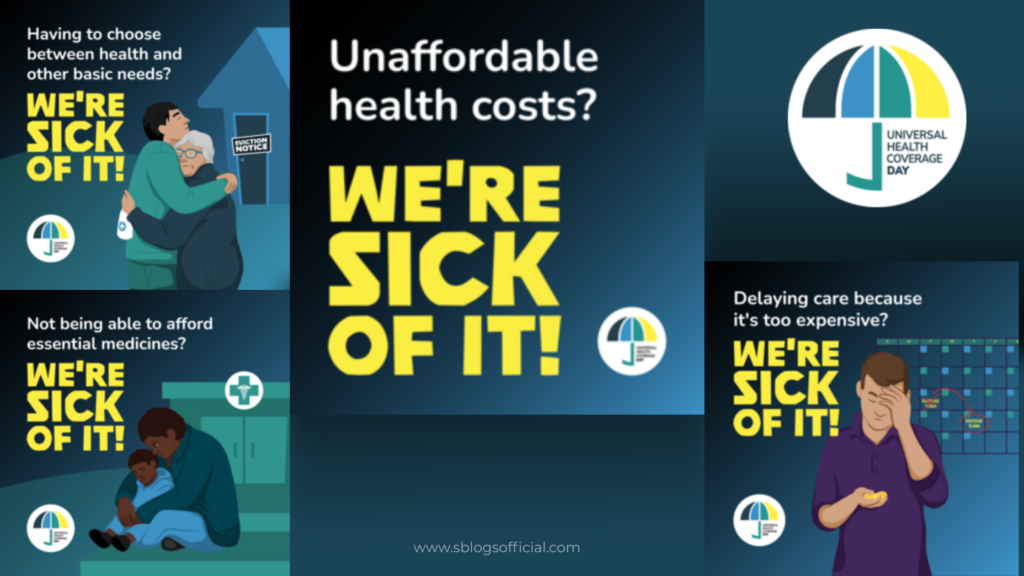
When we prioritise health through Universal Health Coverage jobs, we prioritise humanity. We declare that every person, regardless of income, location, or circumstance, deserves the opportunity to live a healthy life with dignity. We acknowledge our interconnection and shared responsibility for each other’s well-being.
Health for all isn’t just possible, it’s imperative. The path forward through UHC is clear. Now we must walk it together, with urgency and determination, until no one anywhere must choose between healthcare and financial survival. The future we want, where health is truly a right, not a privilege, begins with the choices we make today about what Universal Health Coverage means.
Join the movement. Share your story. Demand action. WHO Universal Health Coverage is within reach; let’s make it a reality.
Must watch the other parts of this blog-
Universal Health Coverage | Affordable Healthcare is for everyone (Part-1) – S Blogs
Universal Health Coverage | Real Stories of Healthcare Inequality (Part-2) – S Blogs