
In the fast-moving world we live in today, physical fitness is often associated with high-intensity exercises, sweat, and fast results. But there’s another way, one that focuses on harmony between mind and body rather than competition or exhaustion. That path is Tai Chi, an ancient art that promotes balance, calmness, and vitality through slow, intentional movements. More and more people across the world are turning to Tai Chi workouts to enhance flexibility, reduce stress, and improve mental well-being. Whether you are a fitness enthusiast, a yoga lover, or simply someone looking for peace of mind, this practice offers something truly transformative.
What is Tai Chi?
Before exploring the exercises and benefits, let’s first understand what Tai Chi is.
Tai Chi (also spelt Taichi or sometimes incorrectly written as Thai Chi) originated in China more than 700 years ago. It was initially practised as a martial art, rooted in Taoist philosophy, and focused on cultivating internal energy — known as “Chi” or “Qi.”
In Chinese, “Tai Chi Chuan” translates to Supreme Ultimate Fist, signifying a balance between yin and yang — the two complementary forces of nature. However, modern Tai Chi workouts are less about combat and more about cultivating peace, mindfulness, and health.
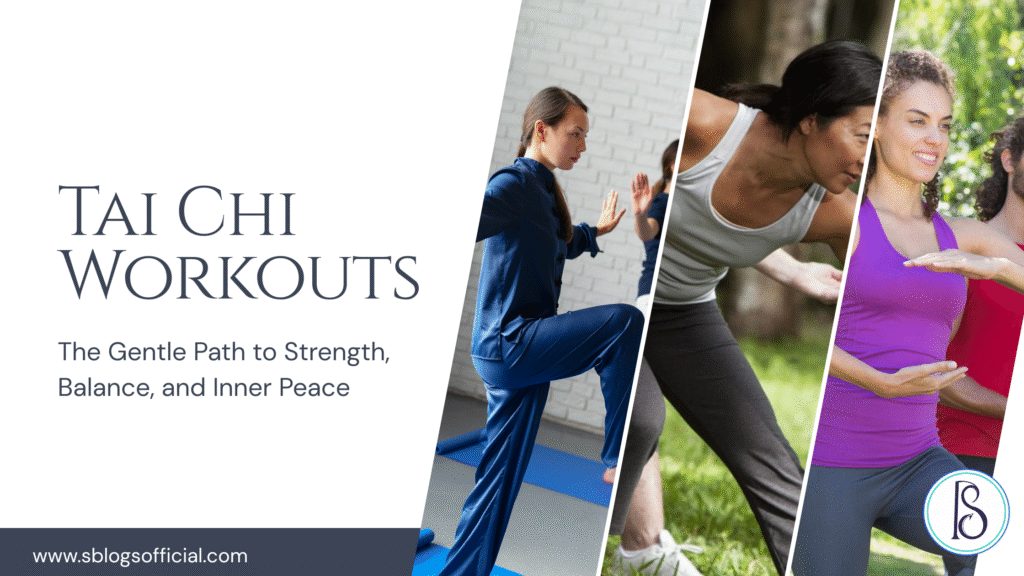
Tai Chi involves a series of graceful; flowing postures performed in a slow, continuous sequence. Each movement transitions smoothly into the next, keeping the body in constant motion while maintaining deep breathing and mental awareness. This makes Tai Chi not only a physical exercise but also a form of moving meditation.
Also Read- 6 Signs of Heart Attack a Month Before You Should Never Ignore
The Essence of Tai Chi Workouts
At its core, Tai Chi workouts are designed to harmonise the mind, body, and breath. Every motion is executed with focus and precision. Unlike fast-paced aerobic exercises, Tai Chi emphasizes balance, posture, and rhythm.
A typical Tai Chi session begins with a few minutes of deep breathing, followed by warm-up stretches to awaken the joints and muscles. Then, the practitioner performs a sequence of movements — often called “forms” that can last from 5 to 20 minutes depending on the style.
Some of the well-known Tai Chi forms include:
- Yang style: Known for its large, graceful, and flowing movements.
- Chen style: The oldest form, involving both slow and fast actions.
- Wu style: Compact, subtle, and focuses on internal energy.
- Sun style: Gentle and upright, ideal for older adults and beginners.
The beauty of Taichi workouts is that they can be adapted to suit anyone, regardless of age, fitness level, or physical condition. The movements are low-impact and joint-friendly, making them perfect even for people with arthritis, chronic pain, or limited mobility.
Also Read- Artificial Intelligence in Healthcare Industry: Future of AI In Healthcare
Tai Chi Yoga: Blending Two Ancient Practices
In recent years, a new hybrid fitness trend has emerged, Tai Chi Yoga, which combines the gentle fluidity of Tai Chi with the strength and mindfulness of yoga.
Both yoga and Tai Chi aim to connect body and mind, but their techniques differ.
- Yoga focuses on static postures and deep stretches that enhance flexibility.
- Tai Chi, on the other hand, focuses on continuous flow and balance.
When combined, Tai Chi Yoga offers a full-spectrum workout — enhancing body awareness, stability, flexibility, and mental calmness.
Practicing Tai Chi Yoga can:
- Improve posture and spine alignment.
- Deepen breath control.
- Reduce anxiety and emotional tension.
- Build muscle strength without strain.
Many instructors now teach Tai Chi Yoga as a fusion class, blending the meditative stillness of yoga with the graceful flow of Tai Chi — an ideal practice for those seeking holistic wellness.
Also Read- Which is the Best Strategy for Avoiding Chronic Diseases Caused by a High-Calorie Diet?
The Science Behind Tai Chi
Modern scientific research has extensively studied Tai Chi benefits.
Several studies, including those published by Harvard Medical School and the Mayo Clinic, confirm that regular Tai Chi practice improves balance, heart health, and mental clarity.
Tai Chi’s slow, rhythmic movements stimulate blood circulation, improve oxygen flow, and strengthen both small and large muscle groups. The breathing patterns used help regulate the autonomic nervous system, reducing stress and promoting calmness.
Interestingly, Tai Chi also affects brain health. Research using MRI scans has shown increased grey matter density in regions associated with memory, attention, and emotion regulation among long-term Tai Chi practitioners.
This proves that Tai Chi is not just physical exercise; it’s a deeply healing art that transforms the mind-body connection.
Also Read- Mastering Your Calm: A Friendly Guide to Positive Stress Management Techniques
Top Tai Chi Benefits
1. Enhances Balance and Coordination
One of the most well-known Tai Chi benefits is improved balance. The practice strengthens the lower body muscles and trains the nervous system to coordinate smooth transitions between movements.
Older adults who practice Taichi workouts regularly have been found to reduce their risk of falls by nearly 50%, according to a Harvard Health study.
2. Boosts Mental Focus and Clarity
Because each motion requires mindful attention, Tai Chi improves concentration and mental endurance. It helps practitioners become more aware of their body’s movement in space — a state known as proprioception.
This mental focus extends beyond the workout, improving daily mindfulness and decision-making.
3. Reduces Stress and Anxiety
Tai Chi’s meditative breathing and gentle rhythm help lower cortisol levels and calm the nervous system. Practicing Tai Chi workouts for even 15 minutes a day can reduce anxiety, enhance mood, and improve sleep quality.
4. Supports Cardiovascular Health
Studies show that regular Tai Chi practice helps regulate blood pressure, increase lung capacity, and improve circulation — making it beneficial for heart health without putting strain on the body.
5. Improves Flexibility and Muscle Tone
Although the movements are slow, Tai Chi engages all major muscle groups. Over time, practitioners notice improved flexibility, endurance, and subtle toning — especially in the legs, back, and core.
6. Enhances Respiratory Function
Deep, diaphragmatic breathing is central to Tai Chi. This breathing pattern strengthens the lungs, enhances oxygen supply, and helps detoxify the body naturally.
7. Promotes Emotional Well-Being
Tai Chi promotes mindfulness, patience, and gratitude. The quiet, reflective nature of Tai Chi workouts allows practitioners to release tension, feel grounded, and cultivate emotional stability.
8. Aids in Pain Management
People suffering from arthritis, fibromyalgia, or chronic back pain have reported reduced pain and increased mobility after consistent Tai Chi practice. The gentle range-of-motion exercises lubricate joints and relax stiff muscles.
9. Strengthens Immunity
Some research suggests that Tai Chi may boost immune response by reducing stress hormones and improving the circulation of white blood cells.
Also Read- Fitness Tips for Busy People: Stay Active, Even on Tight Schedules
How to Start Tai Chi Workouts
Getting started with Tai Chi workouts doesn’t require fancy equipment or a gym membership. You only need comfortable clothing, flat shoes (or bare feet), and an open space.
Here’s how to begin your journey:
- Find an instructor: Join a local class or follow an online guided session. Beginners benefit from learning posture and form correctly.
- Start small: Begin with simple sequences, such as the 8-form or 24-form routine, before progressing to complex movements.
- Practice daily: Even 15–20 minutes of consistent practice will bring noticeable results in posture, balance, and calmness.
- Focus on breathing: Inhale deeply as you prepare for movement, and exhale slowly as you complete each motion.
- Be patient: Tai Chi is not about perfection but about connection. Progress comes with mindfulness, not speed.
Also Read- Understanding the Reality Behind MS: Is Multiple Sclerosis a Rare Disease?
Common Misconceptions about Thai Chi
The term Thai Chi is often mistakenly used to refer to Tai Chi, but they are not the same.
“Thai” refers to Thailand, while Tai Chi originates from China. Despite the confusion, the growing global popularity of Tai Chi has led many to use “Thai Chi” informally.
It’s important to understand that Tai Chi is a Chinese martial art and meditative exercise, deeply rooted in Taoist philosophy, not a Thai practice.
Tai Chi vs Yoga: Which is Better?
Many people wonder whether they should choose yoga or Tai Chi. The truth is, both are beneficial — they simply serve different purposes.
| Aspect | Tai Chi | Yoga |
| Origin | China | India |
| Nature | Moving meditation | Static postures |
| Focus | Flow, balance, and inner energy | Flexibility, breath control, and alignment |
| Ideal for | Stress relief, coordination | Flexibility, muscle tone |
| Suitable for | All ages, especially seniors | All ages, moderate fitness level |
If your goal is to stay active while maintaining mental calm, Tai Chi workouts may be the best choice. For deeper stretches and physical strength, yoga complements it beautifully — and the hybrid Tai Chi Yoga gives you the best of both worlds.
Also Read- Understanding Pinhole Surgical Technique: A Modern Solution for Gum Recession
Integrating Tai Chi into Modern Wellness
Today, Tai Chi is practiced worldwide — not only in parks and community centres but also in hospitals, wellness retreats, and rehabilitation programs.
Physiotherapists recommend Taichi workouts to improve postural control in patients recovering from injury or surgery. Mental health professionals use it as a tool to manage anxiety and depression.
Even corporate wellness programs now include Tai Chi Yoga sessions to help employees reduce stress and increase productivity. This shows how adaptable and universal Tai Chi has become in promoting a balanced, healthy lifestyle.
Also Read- Embracing Holistic Health and Healing: Your Journey to Complete Wellness
Conclusion: Finding Harmony Through Tai Chi
In a time where modern life feels increasingly chaotic, Tai Chi workouts offer a refreshing alternative — a slow, mindful practice that strengthens the body while calming the mind.
Whether you call it Tai Chi, Taichi, or even Thai Chi, its true essence lies in balance and flow. By combining movement, breath, and meditation, Tai Chi allows you to reconnect with yourself and find stillness amidst the noise.
If you’ve been searching for an exercise routine that heals rather than exhausts, Tai Chi Yoga and Tai Chi workouts might just be the perfect companions on your wellness journey. Begin slowly, stay consistent, and watch as your body, mind, and spirit align in perfect harmony.
Reference
- Harvard Health Publishing. (2024). The Health Benefits of Tai Chi.
- Mayo Clinic. (2023). Tai Chi: A Gentle Way to Fight Stress.
- National Center for Complementary and Integrative Health (NCCIH). (2024). Tai Chi: What You Need to Know.
- Harvard Medical School. (2022). The Ancient Art of Tai Chi and Its Modern Health Applications.