
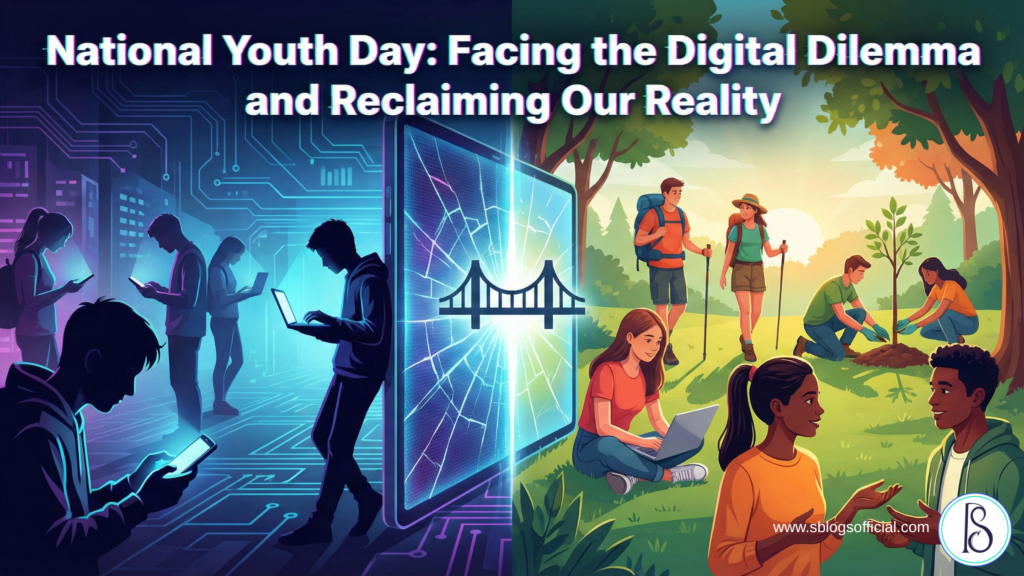
Every National Youth Day, we pause to celebrate the remarkable energy, boundless potential, and bright future that young people represent. It’s a day dedicated to recognising youth as architects of tomorrow, changemakers equipped with unprecedented resources and opportunities. Yet beneath the celebratory rhetoric lies a troubling paradox: whilst this generation enjoys connectivity beyond anything humanity has previously experienced, they simultaneously face an unprecedented crisis of attention, well-being, and genuine human connection.
The irony cuts deep; never have young people been more “connected” through technology, yet never have they felt more isolated, anxious, and disconnected from reality. To truly empower youth today, we must confront what can only be termed the Digital Dilemma: the exhausting, inescapable cycle of screen addiction and the toxic comparison trap that silently erodes both physical health and mental peace. This National Youth Day, it’s time to address the smartphone elephant in the room and discover what proper Digital Hygiene actually looks like.
The Reality Trap: Curated Lives vs. Messy Truths
The smartphone has evolved far beyond a mere communication tool; it’s become the dominant force shaping young people’s daily existence, their self, perception, and their understanding of reality itself. What began as a convenient device has morphed into an all-consuming presence that demands constant attention, fragmenting focus and colonising every spare moment.
The Doomscroll Spiral
Open any social media app, and you’ll find yourself trapped in what’s aptly termed the “doomscroll spiral”, that mindless, hypnotic scrolling that devours hours without conscious intention. This isn’t accidental. Algorithms are meticulously designed by teams of engineers specifically to keep users engaged, exploiting psychological vulnerabilities through endless content feeds that never truly satisfy.
These platforms operate on a simple principle: engagement equals profit. Consequently, the content that keeps you scrolling longest gets prioritised, and research consistently shows that negative, outrage-inducing, or anxiety-provoking content generates more engagement than positive material. Your smartphone becomes a portal to an endless stream of carefully curated anxiety, served up precisely when you’re most vulnerable, lying in bed, during study breaks, whilst commuting, essentially every spare moment.
The Highlight Reel Effect
Perhaps even more insidious than doomscrolling is what psychologists call the “highlight reel effect”, the dangerous tendency to mistake curated online personas for authentic reality. Social media presents a fundamentally distorted view of human existence, where everyone appears to be living their best life constantly: perfect relationships, flawless skin, exotic holidays, academic success, career achievements, and perpetual happiness.
The devastating trap emerges when you compare your own “behind, the, scenes” struggles, the anxiety, the failures, the ordinary moments, the physical insecurities, to someone else’s meticulously polished “highlight reel.” This creates crushingly unrealistic expectations about what life should look like, what you should have achieved by certain ages, and what happiness supposedly resembles. Your smartphone becomes a constant reminder of perceived inadequacy, measuring your messy reality against impossible standards that don’t actually exist anywhere except in carefully edited posts.
Also read- Awakening Energy Through Colour Vibration Therapy
The Invisible Cost of Constant Connection
The Digital Dilemma doesn’t just affect how we perceive ourselves; it manifests in tangible, measurable damage to both physical and mental health that we’re only beginning to fully understand.
The Physical Toll: Stagnation and Sleep Loss
Smartphone addiction creates profound physical stagnation. Hours spent hunched over screens replace movement, outdoor time, and physical activity. Bodies designed for motion instead remain static, leading to poor posture, weakened muscles, reduced cardiovascular fitness, and metabolic issues appearing at increasingly younger ages.
Beyond sedentary behaviour, screens wreak havoc on sleep, one of the most crucial foundations of health. Blue light emitted by smartphones suppresses melatonin production, the hormone that regulates sleep and wake cycles. Late-night scrolling doesn’t just steal time you could be sleeping; it physiologically disrupts your circadian rhythm, making quality sleep difficult even when you do put the phone down. The result? Chronic exhaustion, impaired cognitive function, weakened immunity, and deteriorating mental health, all cascading from poor Digital Hygiene around sleep.
Young people report sleeping with smartphones beside their beds, checking them upon waking, and scrolling before sleep, creating a 24/7 relationship with technology that allows no genuine rest or recovery. Sleep deprivation compounds every other challenge youth face, from academic performance to emotional regulation.
The Mental Toll: The Weight of FOMO and Comparison
The mental health crisis amongst youth correlates disturbingly with smartphone proliferation. The Digital Dilemma fuels severe FOMO (Fear Of Missing Out), the gnawing anxiety that everyone else is experiencing something better, more exciting, more meaningful than you are. Every notification becomes a reminder of social events you’re not attending, experiences you’re not having, lives you’re not living.
Body image issues have reached epidemic proportions, exacerbated by filters, photo editing apps, and influencer culture promoting impossible beauty standards. Young people, particularly young women, measure themselves against digitally altered images, developing dysmorphia about perfectly normal bodies. The comparison game extends beyond appearance to encompass achievements, lifestyles, relationships, and experiences, creating a pervasive sense of inadequacy that colours every aspect of life.
This constant comparison generates anxiety, depression, and a fundamental inability to experience satisfaction or gratitude for one’s own life. Your smartphone becomes a tool of self-torture, yet putting it down triggers anxiety about missing something important, a vicious cycle characteristic of the Digital Dilemma.
Also Read- The Missing Piece in Your Health Journey: Discover Mind-Body Wellness
Reclaiming Control: The Art of Digital Hygiene
Digital Hygiene doesn’t mean abandoning technology entirely, an unrealistic proposition in our modern world. Instead, it involves establishing healthy boundaries that reclaim headspace, restore peace, and rebuild connection with physical reality. Think of Digital Hygiene as essential self-care, as important as brushing teeth or eating nutritiously.
Practical Digital Hygiene strategies for this National Youth Day:
Create Sacred Spaces:
Designate no-phone zones in your life. Keep smartphones out of bedrooms to protect sleep quality and intimate spaces. Make dinner tables phone-free zones to restore genuine conversation and connection. These physical boundaries create mental breathing room essential for well-being.
Curate Your Feed Ruthlessly:
Actively manage what you consume digitally. Unfollow accounts that trigger inadequacy, envy, or negative emotions, regardless of how “popular” they are. Follow accounts that genuinely educate, inspire, or bring joy without comparison. Your digital environment shapes your mental state; curate it accordingly.
Movement Over Scrolling:
Challenge yourself to swap just 30 minutes of daily screen time for physical activity. Walk, dance, exercise, or simply move your body outdoors. Reconnecting with physical sensation and natural environments provides a perspective that hours of scrolling never will, whilst delivering genuine mood and health benefits.
Scheduled Digital Detox:
Implement regular phone, free periods, perhaps one evening weekly, or a few hours daily, where your smartphone is completely off. Initially uncomfortable, these breaks gradually reveal how much mental space constant connectivity consumes.
Also Read- Young Minds, Big Battles: Reclaiming Mental Health in Young Adults
Conclusion
Technology isn’t inherently the enemy; our passive, unconscious relationship with it is. The Digital Dilemma exists not because smartphones are evil, but because we’ve allowed them to dominate our attention, fragment our focus, and mediate our reality without establishing healthy boundaries or practising proper Digital Hygiene.
This National Youth Day, treat it as your reset button. Log off deliberately. Look up from screens and truly see the world around you. Invest your remarkable energy into physical reality rather than virtual profiles. Your actual potential, the kind that changes the world, doesn’t exist in likes, follows, or perfectly curated posts. It exists in the messy, unfiltered, beautifully imperfect real world that awaits when you finally put the phone down. Reclaim it.
Must watch Part 1 of this blog – National Youth Day: Breaking Free from the Hustle Culture Burnout Trap