
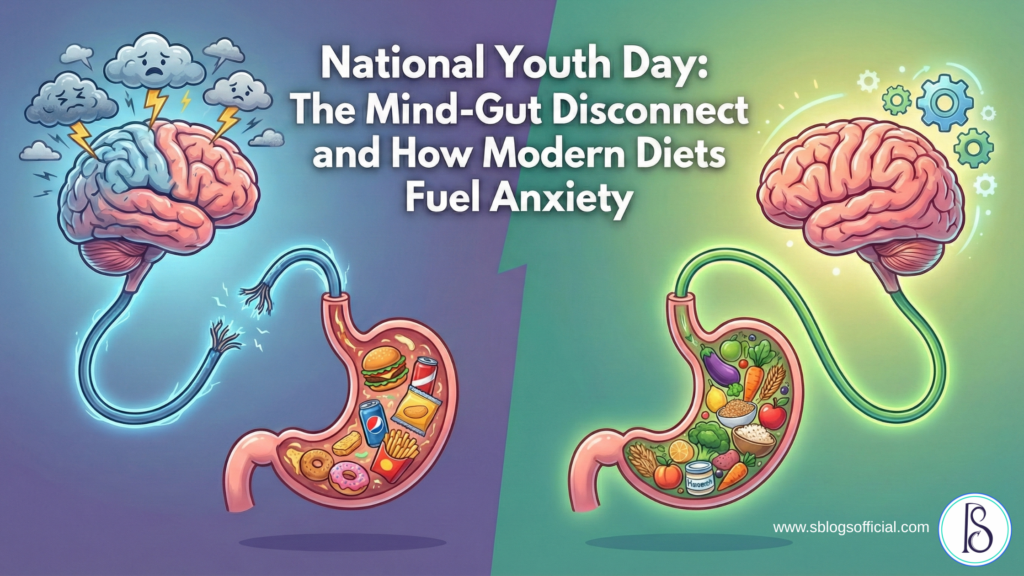
Every National Youth Day, we celebrate the vibrant energy, innovative thinking, and boundless potential that young people embody. Yet beneath the surface of these celebrations lies a troubling reality that demands our attention: youth today face unprecedented levels of anxiety, depression, and mental health challenges that previous generations didn’t experience at such alarming rates.
Whilst we often attribute these struggles to academic pressure, social media, or career uncertainty, all legitimate concerns, we’re overlooking a fundamental, physiological contributor hiding in plain sight: what young people eat. The connection between diet and mental health, particularly how modern diets fuel anxiety, represents one of the most underestimated yet profoundly impactful factors affecting youth wellbeing today.
This National Youth Day, it’s time to explore the mind-gut connection and understand how the very foods aggressively marketed to young people are quite literally feeding their anxiety from the inside out. The truth is both uncomfortable and empowering: what you put on your plate doesn’t just affect your waistline, it fundamentally shapes your mental state, emotional stability, and capacity to handle life’s challenges.
The Convenience Trap: Why Youth Are Eating Anxiety for Breakfast
The Perfect Storm: Marketing, Time Pressure, and Budget Constraints
Walk past any university campus, secondary school canteen, or young person’s flat, and you’ll witness a dietary landscape dominated by highly processed foods, excessive sugar, industrial quantities of caffeine, and fast food consumed not occasionally but as dietary staples. This isn’t happening by accident, nor is it simply a result of poor choices or laziness.
Young people face a perfect storm of factors driving them toward precisely the foods that sabotage mental health. Aggressive marketing specifically targets youth with clever branding, influencer partnerships, and strategic placement of processed foods as “quick fuel” for busy, ambitious lives. When you’re juggling coursework, part-time employment, social commitments, and perhaps caring responsibilities, grabbing a meal deal or ordering takeaway feels less like a choice and more like survival.
The Seductive Promise of Modern Diets
The promise embedded in these modern diets is seductive: convenience without sacrifice, energy without effort, satisfaction without time investment. Energy drinks pledge focus and stamina. Ultra-processed snacks offer comfort during stressful revision sessions. Fast food chains position themselves as affordable solutions for cash-strapped students. Yet these convenient options carry hidden costs that manifest not immediately in pounds gained, but insidiously in anxiety spiralling, moods crashing, and mental clarity evaporating.
When Healthy Eating Becomes a Luxury
Budget constraints compound the issue significantly. When fresh vegetables cost more than instant noodles, when cooking proper meals requires time young people don’t have and equipment they can’t afford, the path of least resistance leads directly to dietary patterns that quite literally fuel anxiety at a biochemical level.
Also Ready- Oregano Tea Benefits: A Soothing Drink with Healing Powers
The Physical Toll: Bodies Running on Empty
The Obesity Paradox: Overfed Yet Undernourished
The immediate, visible health impacts of poor nutrition amongst youth are well-documented and increasingly alarming. Obesity rates amongst young people have tripled in recent decades, with the UK seeing particularly sharp increases. Yet obesity represents merely the most visible symptom of a much broader nutritional crisis.
The Blood Sugar Rollercoaster
Modern diets centred on processed foods create a devastating pattern of energy crashes that young people experience as normal. The typical cycle looks something like this: skip breakfast or grab something sugary, experience a brief energy spike followed by a mid-morning crash, reach for caffeine and more sugar, repeat throughout the day, then collapse exhausted in the evening, only to struggle with sleep due to caffeine and sugar consumed late in the day. This isn’t sustainable energy; it’s a biochemical rollercoaster that leaves young people perpetually depleted.
The Hidden Nutrient Deficiency Crisis
Nutritional deficiencies run rampant amongst youth despite, or perhaps because of, abundant caloric intake. You can simultaneously be overfed and undernourished when your diet consists primarily of foods stripped of essential nutrients during processing. Deficiencies in crucial nutrients like B vitamins, magnesium, omega-3 fatty acids, and zinc don’t just affect physical health; they directly impair mental function, emotional regulation, and stress resilience.
Gut Health: The Foundation Under Attack
Perhaps most significantly for mental health, modern diets devastate gut health through lack of fibre, excess sugar feeding harmful bacteria, and processed ingredients disrupting the delicate microbial ecosystem in our digestive systems. This matters enormously because your gut isn’t just responsible for digestion, it’s intimately connected to your brain in ways science is only beginning to fully understand.
Also Read- Body Detoxification Supplements: An Ayurvedic Path to Cleansing and Renewal
The Mind-Gut Connection: Your Second Brain and Mental Health
Meet Your Second Brain: The Enteric Nervous System
Here’s where the story becomes fascinating and deeply relevant to understanding how modern diets fuel anxiety: your gut contains approximately 100 million neurons, more than your spinal cord, earning it the designation as your “second brain.” This enteric nervous system doesn’t just manage digestion; it communicates constantly and bidirectionally with your actual brain via the vagus nerve, creating what scientists call the gut-brain axis.
The Serotonin Connection: Why Gut Health Determines Mood
Your gut produces about 90% of your body’s serotonin, yes, the same neurotransmitter that antidepressants target to alleviate depression and anxiety. When your gut health suffers due to a poor diet, serotonin production becomes compromised, directly affecting mood regulation, emotional stability, and anxiety levels. This isn’t metaphorical, it’s measurable, biochemical reality.
The Microbiome: Trillions of Bacteria Influencing Your Mental State
The trillions of bacteria comprising your gut microbiome, collectively weighing about the same as your brain, actively influence mental health through multiple pathways. Beneficial bacteria produce compounds that reduce inflammation, synthesise vitamins crucial for brain function, and even manufacture neurotransmitter precursors. Harmful bacteria, which flourish when fed the sugar and processed ingredients abundant in modern diets, produce inflammatory compounds and metabolic byproducts that cross into your bloodstream and ultimately affect brain function.
Also Read- Mind-Body Wellness Guide: 7 Dimensions of True Health – S Blogs
The Groundbreaking Research: Transferring Anxiety Through Gut Bacteria
Emerging research reveals direct links between gut health and specific mental health conditions. Studies show that people with anxiety disorders have distinctly different gut microbiome compositions compared to those without anxiety. When researchers transfer gut bacteria from anxious individuals into previously calm mice, those mice begin displaying anxious behaviours, a stunning demonstration of how profoundly gut health shapes mental state.
For young people consuming modern diets heavy in processed foods, sugar, and lacking in fibre and fermented foods, the result is a gut environment that actively fuels anxiety rather than supporting mental equilibrium. Brain fog, mood swings, difficulty concentrating, heightened stress reactivity, and baseline anxiety aren’t just “how you are”; they’re potentially symptoms of a disrupted gut-brain axis crying out for better nutrition.
Also Read- Crystals For Stress and Anxiety | Stress Relief Books | Laughing
The Mental Peace Impact: When Food Becomes a Mood Destabiliser
Blood Sugar Volatility and Emotional Instability
The mental health consequences of poor nutrition extend beyond the gut-brain axis, though that connection alone proves profound. Modern diets create a cascade of effects that systematically undermine mental peace and emotional stability.
Blood sugar volatility from high-sugar, low-fibre diets creates mood instability that young people often don’t recognise as food-related. That irritability before lunch? Likely blood sugar crashing. The afternoon anxiety spike? Perhaps caffeine interacts with depleted nutritional reserves. The evening depression? Potentially, the cumulative effect of a day spent fuelling your body and brain with substances that provide calories but starve you of nutrients.
Inflammation: The Hidden Mental Health Saboteur
Chronic inflammation, driven by processed foods, sugar, and trans fats abundant in typical youth diets, doesn’t just affect joints and arteries; it affects brain function. Inflammatory markers correlate strongly with depression and anxiety, with some researchers proposing that much of what we label as mental illness may actually represent inflammatory conditions affecting the brain. When modern diets fuel anxiety through inflammatory pathways, you’re not weak or broken; you’re experiencing a predictable physiological response to inflammatory inputs.
The Caffeine Conundrum: Anxiety in a Can
Caffeine deserves special mention in the youth mental health conversation. Whilst moderate caffeine can enhance focus, the quantities consumed by many young people, through energy drinks, multiple coffees, and caffeinated soft drinks, create physiological states indistinguishable from anxiety: racing heart, restlessness, difficulty concentrating, irritability, and sleep disruption. When you’re already anxious, and you add excessive caffeine, you’re quite literally pouring fuel on fire.
The Vicious Cycle: Anxiety Drives Poor Food Choices
The cruel irony is that young people often turn to these exact foods, sugary snacks, caffeine, processed comfort foods, when feeling anxious or stressed, seeking comfort or energy. Yet these choices, whilst providing temporary relief, ultimately worsen the underlying anxiety, creating a vicious cycle where modern diets fuel anxiety, which then drives consumption of more anxiety-promoting foods.
Also Read- Gluten Intolerance vs Lactose Intolerance | A Complete Guide
Nutrition as Mental Health Medicine: Reframing Food for This Generation
Beyond Weight Loss: Food as Mental Clarity Fuel
This National Youth Day, we need a fundamental reframing of how young people think about nutrition. Food isn’t just about weight management, body image, or physical health; it’s quite literally fuel for mental clarity, emotional stability, and anxiety resilience.
When you understand that your food choices directly affect neurotransmitter production, inflammation levels, gut-brain communication, and blood sugar stability, eating well stops being about vanity or discipline and becomes about self-preservation and mental health protection. You’re not eating vegetables to look good, you’re eating them to feel emotionally stable. You’re not reducing sugar to lose weight, you’re doing it to quiet anxiety. Not choosing whole foods over processed ones for some abstract future health benefit; you’re doing it for mental clarity today.
Also Read- Festive Season and Importance of a Healthy Diet Guide – S Blogs
Practical Action Steps for Better Mental Health Through Nutrition
Prioritise Gut-Friendly Foods:
Fermented foods like yoghurt, kefir, sauerkraut, and kimchi introduce beneficial bacteria. Fibre-rich foods like vegetables, fruits, whole grains, and legumes feed those beneficial bacteria, helping them thrive and produce mental-health-supporting compounds.
Stabilise Blood Sugar:
Combine protein, healthy fats, and complex carbohydrates in meals to avoid the sugar spikes and crashes that create mood volatility. Starting your day with protein rather than sugary cereal fundamentally changes your emotional baseline for hours.
Reduce Inflammatory Foods:
Whilst you needn’t eliminate everything enjoyable, consciously reducing processed foods, excess sugar, and trans fats whilst increasing anti-inflammatory foods like fatty fish, nuts, olive oil, and colourful vegetables measurably affects mental state within weeks.
Rethink Caffeine Consumption:
If you’re struggling with anxiety, experiment with reducing or eliminating caffeine for two weeks. Many young people discover their “anxiety” was partially caffeine-induced physiological arousal they’d mistaken for psychological distress.
Cook When Possible:
Beyond nutritional benefits, cooking engages you in a mindful, creative activity that builds competence and provides genuine accomplishment, all beneficial for mental health, independent of what you’re actually cooking.
Also Read- How WHO Universal Health Coverage Can End Financial Hardship – S Blogs
Nourishing Bodies, Calming Minds for This National Youth Day
Modern diets fuel anxiety; this isn’t opinion or moralising; it’s increasingly well-established science revealing uncomfortable truths about how contemporary food environments systematically undermine youth mental health. Yet within this truth lies tremendous power: if diet contributes to anxiety, changing diet can reduce anxiety.
This National Youth Day, recognise that honouring youth potential means equipping young people with knowledge about how profoundly nutrition affects mental health. It means challenging food industry marketing that positions anxiety-promoting foods as youth-appropriate staples. It means making nutritious food more accessible and affordable for students and young workers.
Most importantly, it means young people themselves understand that they’re not powerless victims of their anxiety. While therapy, medication, and lifestyle changes all play crucial roles, the simple act of nourishing your body with real food represents a powerful and accessible intervention you can start today. Your mind deserves better fuel than what modern diets typically provide. Feed it accordingly.
Must watch Part 1 of this blog – National Youth Day: Breaking Free from the Hustle Culture Burnout Trap