
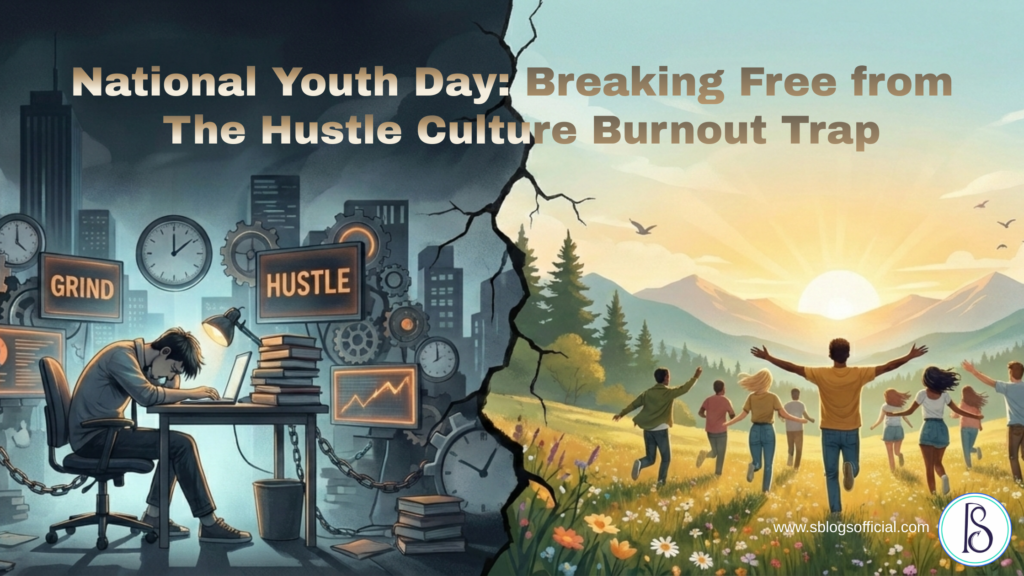
Every year on National Youth Day, we celebrate the boundless energy, innovative spirit, and limitless potential of young people who will shape tomorrow’s world. It’s a day filled with inspirational quotes, motivational speeches, and social media posts highlighting youth achievements. Yet beneath the celebratory surface lies an uncomfortable truth that demands our attention: instead of feeling energised and hopeful about their futures, countless young people feel utterly exhausted, overwhelmed, and dangerously close to breaking point.
Welcome to the Burnout Epidemic, a silent crisis consuming an entire generation. Student burnout statistics paint an increasingly alarming picture, with research indicating that over 70% of students experience significant burnout symptoms before entering the workforce. Meanwhile, burnout in workplace studies reveal that young professionals are burning out faster and more severely than any previous generation, often within their first few years of employment.
To genuinely honour youth potential this National Youth Day, we must move beyond platitudes and address the toxic pressure of “hustle culture” that’s normalised exhaustion as the price of success. We need to recognise that the path to achievement shouldn’t systematically destroy the people walking it. Understanding the stages of burnout becomes crucial when ambition transforms from a motivating force into a mental health crisis that derails entire futures.
The Glorification of “The Grind”: A Modern Crisis
The “Always-On” Mentality Taking Over Youth Culture
Scroll through any social media platform, and you’ll encounter the relentless mantra of modern youth culture: “Rise and grind.” “Sleep when you’re dead.” “Success doesn’t sleep; neither should you.” “No days off.” “Work now, rest later.” These aren’t just motivational phrases; they’ve become the operating system for an entire generation’s approach to life.
For today’s youth, hustle culture isn’t merely motivation or inspiration; it’s an expectation, a requirement, a test of worthiness. The pressure to constantly achieve academically whilst simultaneously building an impressive CV, maintaining multiple social media presences, networking relentlessly, perhaps working part-time jobs, and somehow also having a semblance of social life has created a generation running perpetually on fumes.
The Alarming Reality Behind Student Burnout Statistics
Student burnout statistics reveal this isn’t merely an anecdotal concern or generational hand-wringing. Recent studies show that over 70% of students experience significant burnout symptoms, with numbers climbing even higher amongst those pursuing competitive fields like medicine, law, engineering, and business. University counselling services report unprecedented demand, with waiting lists stretching for months. The “always-on” mentality has normalised sleepless nights fuelled by energy drinks and caffeine pills, celebrating exhaustion as a badge of honour rather than recognising it as a serious warning sign of declining health.
The Moving Goalposts: Why “Enough” Never Feels Achievable
The competitive landscape of modern education and early career development has intensified exponentially. It’s no longer sufficient to excel academically; you must also volunteer, intern, build a personal brand, network strategically, learn additional skills outside your curriculum, and demonstrate “passion” through extracurricular achievements. The goalposts keep moving, and the message young people internalise is clear: you are never doing enough.
The Fear of Falling Behind: Anxiety as the New Normal
Underneath this relentless drive lurks constant, gnawing anxiety about future careers and financial security. Young people watch older generations struggle with job instability, hear endless rhetoric about competitive markets, and internalise the message that any pause, any moment of rest, means falling irretrievably behind peers who never stop. Taking a mental health day feels like career suicide. Admitting you’re struggling appears synonymous with weakness. The fear of being “left behind” creates a toxic cycle where recognising the stages of burnout becomes impossible because stopping feels infinitely more dangerous than continuing despite the warning signs your body and mind are desperately sending.
Also Read- Pomodoro Technique | Master Focus & Beat Burnout – S Blogs
The Hidden Costs: When Ambition Attacks Health
The Physical Toll: Your Body Wasn’t Built for This
Chronic Stress and the Cortisol Crisis
The human body wasn’t designed for perpetual grinding. Our physiological systems evolved to handle acute stress, the kind that helped our ancestors escape predators, followed by periods of rest and recovery. Modern hustle culture, however, creates chronic, unrelenting stress that keeps the body in a constant state of alarm.
Chronic stress elevates cortisol levels, flooding the body with stress hormones that were meant for short-term emergencies, not sustained over months and years. This constant physiological activation wreaks havoc on virtually every bodily system. Student burnout statistics correlate directly with weakened immune systems. When you’re always stressed, your body can’t properly defend against illness. Young people find themselves constantly catching colds, battling infections, and experiencing mysterious ailments that doctors struggle to diagnose because they’re manifestations of chronic stress rather than distinct diseases.
The Sleep Deprivation Epidemic Among Youth
Sleep disorders plague youth culture, with insomnia, disrupted sleep patterns, and sleep deprivation becoming so normalised that many young people can’t remember what genuine, restorative sleep feels like. The early stages of burnout manifest physically through persistent headaches that painkillers barely touch, digestive issues ranging from nausea to irritable bowel syndrome, frequent illness that seems to cycle endlessly, and crushing fatigue that no amount of coffee, energy drinks, or sheer willpower can remedy.
When Twenty-Somethings Develop “Middle-Age” Health Problems
Yet recognising these symptoms proves extraordinarily difficult when everyone around you looks equally exhausted, when “pulling all-nighters” is a shared experience rather than a concerning exception, when discussing how little sleep you got becomes a form of social currency. Burnout in the workplace research shows that young professionals experience physical health deterioration at alarming rates, with stress-related conditions like hypertension, chronic pain, and metabolic disorders appearing decades earlier than previous generations experienced. Twenty-five-year-olds are developing health conditions once associated with middle age.
Also Read- Laziness and Executive Dysfunction | Don’t Call It Laziness – S Blogs
The Erosion of Mental Peace: The Psychological Price of Hustle Culture
How Burnout Rewires Your Brain
Beyond the physical symptoms, the stages of burnout progressively devastate mental well-being in ways that can fundamentally alter a person’s psychological landscape. Living in constant “fight or flight” mode literally rewires the brain, shrinking the hippocampus (involved in memory and emotional regulation) whilst enlarging the amygdala (the fear centre). This neurological restructuring makes genuine relaxation physiologically difficult; even when you have free time, your nervous system remains hypervigilant, unable to downshift into rest mode.
The Paralysing Fear of Failure
The paralysing fear of failure becomes so overwhelming and pervasive that young people cannot enjoy present moments because they’re perpetually anxious about future outcomes. Every assignment, every work project, every social interaction carries the weight of potential catastrophe. The stakes feel impossibly high because hustle culture has convinced youth that any mistake, any setback, any less-than-perfect performance represents not just temporary difficulty but permanent failure that will derail their entire future.
The Rest-Guilt Paradox: When Relaxation Triggers Anxiety
Perhaps most insidiously, hustle culture creates a damaging psychological paradox: relaxing triggers intense guilt and anxiety rather than recovery and restoration. When you finally sit down to rest, to watch something mindless, to simply be present without productivity, your mind screams that you’re wasting precious time, that competitors are working whilst you’re idle, that you’re failing your future self. This makes true rest nearly impossible; you’re physically still but mentally churning, unable to access the restorative states that genuine downtime provides.
Also Read- Tai Chi Workouts for All Levels | Discover Peaceful Power – S Blogs
Understanding the Stages of Burnout: From Stress to Crisis
Student burnout statistics reveal that anxiety and depression rates amongst youth have skyrocketed over the past decade, directly correlating with increased academic pressures, social media comparison culture, and professional expectations. The World Health Organisation now recognises burnout as an occupational phenomenon, acknowledging its devastating impact on mental health.
The advanced stages of burnout include emotional numbness and detachment, a psychological protective mechanism where you simply stop feeling much of anything because the alternative is overwhelming. Previously enjoyed activities lose their appeal. Hobbies feel like burdens. Social connections feel exhausting rather than nourishing. A pervasive cynicism colours everything grey, making it difficult to remember why you started chasing these goals in the first place. At its most severe, burnout creates a dangerous sense of hopelessness where young people question whether any of it matters, whether they matter, and whether continuing is worth the cost.
Also Read- Sleep Hygiene for Teenagers | Expert Guide to Better Sleep
Redefining Success: Inner Peace is Productive
Achievement Without Health is Hollow Victory
This National Youth Day, we must fundamentally challenge the current definition of success that’s been sold to young people. Achievement without mental health isn’t success, it’s a house built on crumbling foundations that will eventually collapse, often spectacularly and without warning. Reaching your goals whilst systematically destroying your wellbeing in the process represents a hollow victory that leaves you too broken, too depleted, too fundamentally altered to actually enjoy what you’ve built.
The Radical Truth: Rest Fuels Success, Not Sabotages It
Here’s the radical mindset shift that could quite literally save a generation: rest isn’t laziness. Boundaries aren’t a weakness. Saying no isn’t failure. Inner peace isn’t a luxury reserved for after you’ve “made it”, it’s the very fuel that makes sustainable achievement possible in the first place.
Recognising the Stages of Burnout Before It’s Too Late
Understanding the stages of burnout allows for intervention before reaching the crisis point, but only if we collectively stop glorifying the grind long enough to recognise warning signs. The early stage involves sustained stress and anxiety despite working harder. The middle stage brings cynicism, detachment, and declining performance despite maximum effort. The final stage manifests as complete physical and emotional exhaustion, where functioning becomes nearly impossible. Catching burnout early, in those first stages, prevents the profound damage that advanced burnout inflicts.
Why Well-Rested Youth Outperform Exhausted Overachievers
Burnout in workplace research consistently demonstrates that well-rested, mentally healthy employees significantly outperform their exhausted counterparts across every metric that matters, creativity, problem-solving, productivity, accuracy, and interpersonal effectiveness. The same principle applies absolutely to students. Your brain requires genuine downtime to consolidate learning, process experiences, form memories, and generate creative solutions. Those “lazy” moments of stillness, those “unproductive” hours of simply being? They’re precisely when your subconscious solves problems your conscious mind couldn’t crack through sheer force of will.
Setting Boundaries Isn’t Sabotage, It’s Self-Preservation
Setting boundaries, saying no to additional commitments that would overextend you, protecting sleep schedules as non-negotiable, taking genuine breaks where you’re truly off rather than constantly checking emails, isn’t sabotaging your future. It’s ensuring you actually possess the mental and physical health to enjoy that future when you reach it, and that you reach it intact rather than shattered.
Also Read- Mind-Body Connection Books & Practices: Expert Guide
A New Vision for National Youth Day
Ambition remains a beautiful, powerful quality. Dreams matter. Goals provide direction and meaning. Hard work creates opportunities. However, burnout is preventable, and preventing it doesn’t mean abandoning ambition; it means pursuing it in a sustainable manner.
This National Youth Day, let’s commit to a fundamentally different future where young people can chase dreams without sacrificing physical and mental well-being as inevitable collateral damage. Recognising the stages of burnout empowers early intervention. Challenging student burnout statistics requires cultural change, not just individual solutions. Addressing burnout in the workplace means restructuring organisational expectations and rejecting toxic productivity cultures.
True success includes inner peace, not despite ambition, but as its necessary foundation. The hustle will always be there tomorrow; your health might not be. This National Youth Day, honour youth potential by protecting the minds and bodies where that potential lives.